
If you’ve signed up for the First Certificate in English exam and need help with the Speaking test, then this page is here to help. You’ll find below an overview of the oral exam plus tips to help you do your best on the day of the FCE test.
Duration: Approximately 14 minutes.
Participants: Candidates interviewed in pairs. (In threes for the final session at a centre with an odd number of candidates). Two examiners are present. One examiner (the interlocutor) carries out the interviewer whilst the second (the assessor) focuses on the candidate’s performance.
Format: There are four parts to the test.
FCE Speaking Test: Part 1 (Interview)
Tests ability to: use language for social purposes, e.g. making introductions, answering questions about yourself.
Part 1 of the FCE Speaking test lasts about 3 minutes. The examiner will ask some ‘getting-to-know-you’ questions perhaps to find out where you come from, your interests, your family or your studies etc.
Example Questions
Q: Where are you from?
Q: Tell me something about your family.
Q: What did you enjoy most when you were at primary school?
Q: Do you have any plans for a holiday this year?
Q: Do you play any musical instruments?
Tips!
Giving full answers to the examiner’s questions will help get the interview off to a good start.
1) Avoid giving short, uncommunicative replies.
Q: Tell me something about your family.
A: I live with my mum, dad and sister and brother. (Don’t stop there!) My sister’s younger than me and still goes to school. My brother works as a computer technician.
2) Avoid short, ‘yes’, ‘no’ answers to closed questions. (These are questions beginning ‘Have you …’, ‘Do you …’, ‘Is it …’ etc which can be answered simply with a yes or no answer).
Q: Do you have any plans for a holiday this year?
A: Yes. (Don’t stop there!) If I get the chance I’d like to visit my friend in Germany. We haven’t seen each other for a while and I’m really looking forward to seeing him and getting to know Germany.
Q: Do you play any musical instruments?
A: No. (Don’t stop there!) We had music lessons when I was at school but I was never very good.
3) Offer examples to help you explain a statement.
Q: Why are you preparing for the FCE exam?
A: No reason really. (Don’t stop there!) I enjoy learning English and I think it would be good to have a qualification to show my level.
FCE Speaking Test: Part 2 (Long Turn)
Part 2 of the FCE Speaking test lasts between 4 minutes (6 minutes for groups of three). The examiner gives you two photographs and your partner a different pair of photographs. You have to speak about your two photos without interruption for about 1 minute and also answer a question about your partner’s photographs when he or she has finished their long turn.
Tests ability to: speak at length coherently, use language to describe, compare and contrast and comment upon a topic.
Example Task
The interview will begin with the examiner saying something like:
Q: In this part of the test I’m going to give each of you two photographs. I’d like you to talk about your photographs on your own for about 1 minute and also to answer a short question about your partner’s photographs.
Q: (Candidate A), here are your photographs. They show people participating in sporting activities.
Q: I’d like you to compare the two photographs and say why sport is important to people.
Q: All right?
Notice there are TWO instructions here: first to ‘compare’ the two photographs and also ‘to say why’ sport is important to people. In Part 2 candidates need to show they can compare but also give an opinion.
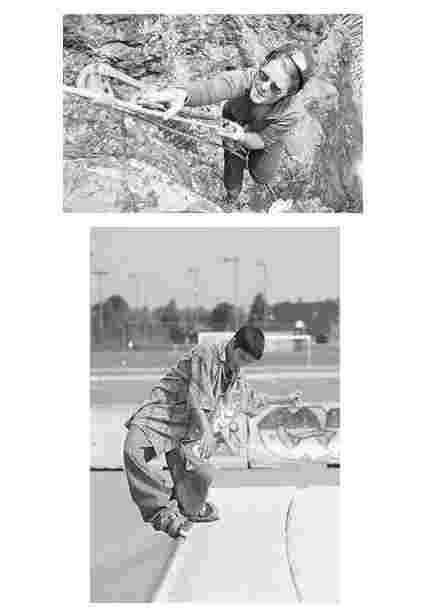
The examiner will then ask Candidate B a short question about these photographs.
Q: Thank you (Candidate A). (Candidate B) which sport would you most like to try?
Candidate B will then do their long turn with a different set of photographs and at the end, Candidate A will be asked a short question.
Tips!
1. Listen to the instructions carefully and make sure you know what you have to talk about. If you don’t understand the instructions you should ask the examiner to repeat them:
“Excuse me, could you say that again?”
“I’m sorry, but would you mind repeating that?”
2. The question will help you with the structure of your talk.
A) Start with a general summary of the topic:
‘These two photographs show people involved in a sport.’
B) Then move on to a comparison of the two pictures, using words to help explain the comparison:
Both photographs were taken outside and each of the people are concentrating hard on what they’re doing. ‘The top photo shows a woman rock climbing whilst the bottom photo is of a young skating … It looks like the woman is out in the natural world whereas the boy is in a man-made skating park ….. etc.’
C) Finally give your opinion with examples, again using signposting words and expressions to help the examiner follow your argument.
‘In my opinion, sport is important for people in lots of ways. For example, it’s a way to keep fit of course, but we also meet new people and can get a lot of enjoyment from a sport … etc.’
4. Practise making short one-minute talks as often as possible to get an idea for how long 1 minute feels like. Time yourself and ask a friend for feedback.
FCE Speaking Test: Part 3: (Collaborative Task)
Tests ability to: use language to express and justify an opinion, to agree and disagree etc.
In Part 4 of the test, which lasts about 4 minutes, the examiner will join both candidates in a discussion about the general topic that appeared in Part 3.
Example Questions
Q: Which sports are popular with young people in your country?
Q: Some people say people don’t participate in sport as much as they should. Do you think this is true?
Q: Do you think team sports are more fun than individuial sports
Tips
1. Again, as with earlier sections of the test, avoid short, ‘yes’, ‘no’ answers to the examiner’s questions.
2. Continue to work with your partner. Respond constructively and show interest in things he or she says.
Tests ability to: use language to discuss, express an opinion, to agree and disagree, speculate and evaluate etc.
In Part 3 of the test, which lasts about 3 minutes, the examiner will give both candidates instructions and a set of visuals and the candidates will have to try to reach some form of agreement.
Example Task
The examiner will say something like:
Q: Now, I’d like you to talk about something together for about 3 minutes.
Q: I’d like you to imagine that you are planning a week-long touring holiday with your partner around the country that you’re studying in. You want to see as much as possible but don’t want to spend too much money on transport. Look at the types of transport shown in the photographs.
Q: First talk to each other about how useful each of these forms of transport might be for your holiday. Then decide which one would be best.
Q: All right?
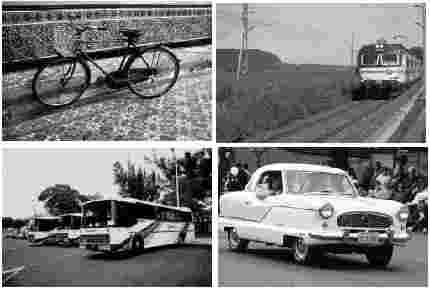
Notice there are TWO instructions here: first to talk about each form of transport then to ‘decide’ which one is best for your holiday. This means you have to do more than just describe the different forms of transport. You also have to show you can work with your partner to try to reach some form of agreement. You don’t have to reach agreement but you must at least work towards this.
Tips!
It will help both yourself and your partner if you work together collaboratively on this task.
1. Be prepared to ask your partner for his or her opinion rather than simply stating your own. For example:
‘What do you think?’
‘How about you?’
‘Do you think …?’
2. Listen carefully’ to what your partner says and respond to comments he or she makes to help the discussion flow. For example:
‘Do/Have/Are you?’
‘Don’t/Haven’t/Aren’t you?’
‘Do you think so?
‘Really?’
3. If you disagree try expressing this politely. For example:
‘I see what you mean but …‘
‘I can see your point but …‘
‘But don’t you think …’
4. Use expressions to allow yourself time to think. For example:
‘That’s a good question.’
‘Well, let me think …‘
‘It’s difficult to say …’
5. You’ll possibly find you don’t understand something your partner has said. If this happens, take control with simple questions like those below to help you deal positively with the situation. This will also give you the chance to impress the examiner with your communication skills.
A) If you didn’t quite understand a word or phrase just say something like:
“Sorry but could you explain what you mean by ……..” or
“I haven’t come across that word/expression before. Could you explain what you mean?”
B) If you didn’t hear or didn’t understand something your partner has said, ask them to repeat it:
“Sorry, I didn’t catch that. Could you say that again?”
“Excuse me. Could you repeat that?”
C) Alternatively, you might want to confirm what you think your partner said so you could say something like:
“Do you mean ……..”
“When you say …….., are you asking/do you mean ……..?”
FCE Speaking Test Part 4: (Discussion)
Tests ability to: use language to express and justify an opinion, to agree and disagree etc.
In Part 4 of the test, which lasts about 4 minutes, the examiner will join both candidates in a discussion about the general topic that appeared in Part 3.
Example Questions
Q: Which sports are popular with young people in your country?
Q: Some people say people don’t participate in sport as much as they should. Do you think this is true?
Q: Do you think team sports are more fun than individuial sports
Tips
1. Again, as with earlier sections of the test, avoid short, ‘yes’, ‘no’ answers to the examiner’s questions.
2. Continue to work with your partner. Respond constructively and show interest in things he or she says.